
Why Every Backcountry Hiker Needs a Dedicated Fire Kit
Whether you are heading out for a day hike, an overnighter, or a crown land hot tenting trip, fire is your primary line of defense against hypothermia, damp cold, and emergency signal needs.
Relying on a single gas gas-station lighter tossed into the bottom of a pack is one of the most common mistakes backcountry enthusiasts make. When lighters freeze, get soaked, or run out of fuel, a simple cold evening can turn into a emergency situation.
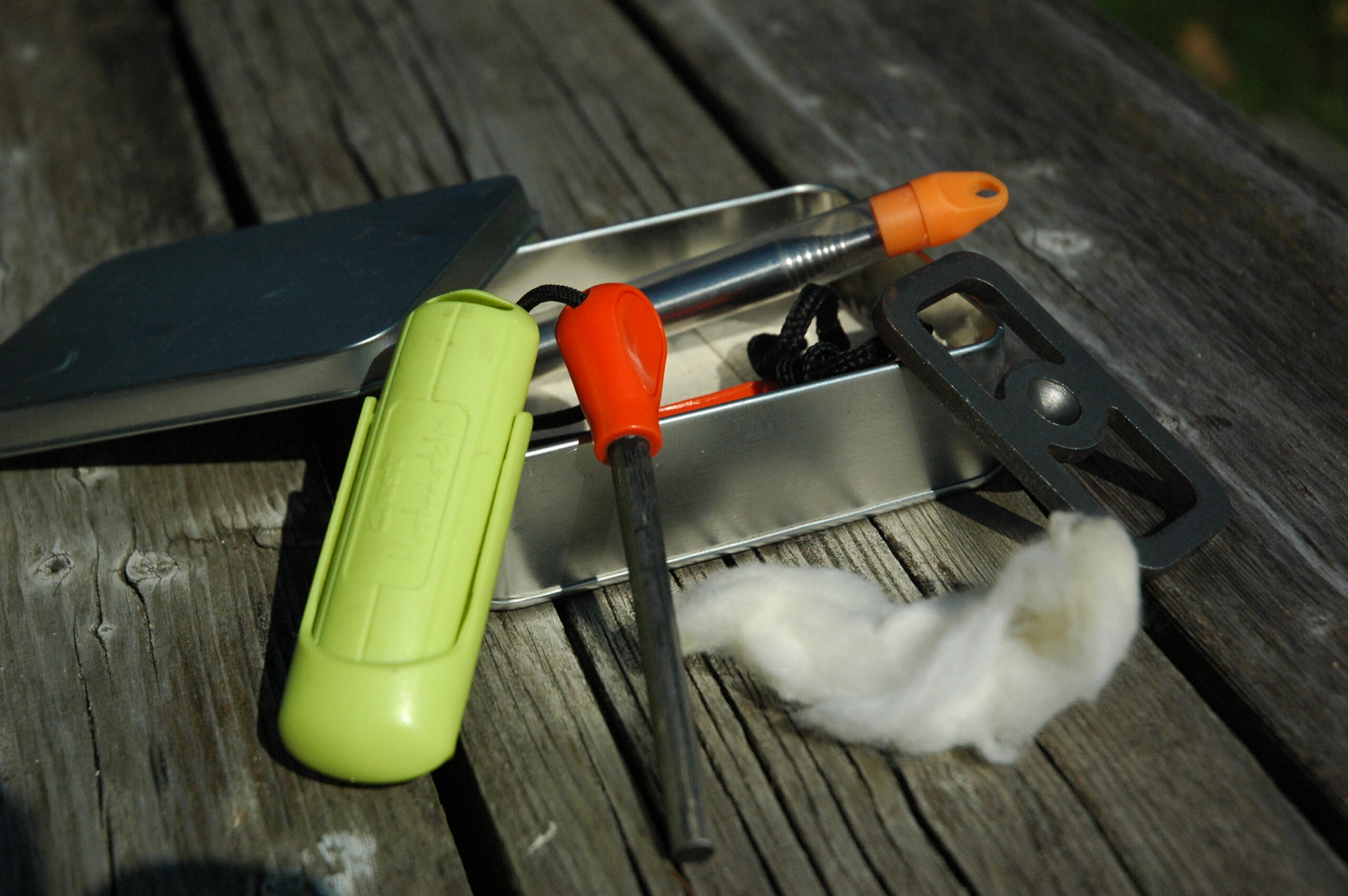
A proper wilderness fire kit combines redundant ignition tools, reliable tinder, and weatherproof storage into one lightweight pouch.
The Core Anatomy of a Backcountry Fire Kit
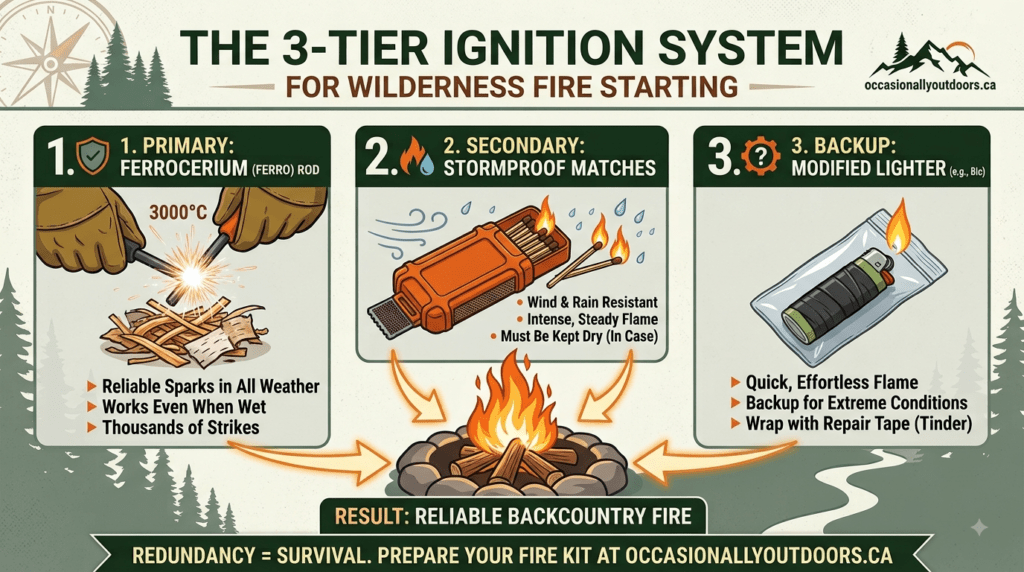
1. Primary Ignition: The Ferrocerium (Ferro) Rod
A heavy-duty ferro rod is the gold standard for bushcraft and emergency survival.
- Why it works: It produces shower-like sparks exceeding 3,000°C (5,400°F).
- Weatherproof: Unlike matches or lighters, a ferro rod functions even after being fully submerged in water—simply wipe it off and strike.
2. Secondary Ignition: Stormproof Matches & Case
Stormproof matches burn vigorously even in high winds and heavy driving rain.
- Pro Tip: Keep them in a sealed, hard-shell container with an external striker strip to keep them bone-dry.
3. Backup Ignition: Modified Bic Lighter
A standard disposable lighter is quick and effortless when your fingers are numb from cold weather.
- Pro Tip: Wrap duct tape or gorilla tape around the body of the lighter. This provides emergency repair tape and acts as an excellent extended-burn tinder in a pinch.
Tinder: The Secret to Reliable Fire Starting
Sparks and flames mean nothing without the proper tinder to catch them. In the wet Canadian wilderness, relying exclusively on finding dry birch bark or pine needles can fail in a downpour.
| Tinder Type | Water Resistance | Burn Time | Best Ignition Source |
| Fatwood Chips / Shavings | High (Natural Resin) | Long / Steady | Ferro Rod Sparks / Match |
| Petroleum Jelly Cotton Balls | High (Water-Repellent) | 2–3 Minutes | Ferro Rod Sparks |
| Birch Bark (Natural) | High (Natural Oils) | Quick / Hot Flame | Open Flame / Ferro Rod |
| Wax-Infused Tinder Cord | Extremely High | Adjustable | Ferro Rod Sparks |
How to Pack Your Fire Kit with Occasionally Outdoors Gear
To ensure your fire kit is accessible when cold or wet weather sets in, store it logically within your backpack setup:
- Keep it Accessible: Store your fire kit in the top lid compartment or front organizer pocket of your 56L Hiking & Trekking Backpack or 90L Expedition Backpack. Never bury it deep inside your main dry bag where you have to unpack gear in the rain.
- Combine with Cutting Tools: Keep a reliable bushcraft knife or multi-tool right next to your fire kit so you can quickly process fatwood, make feather sticks, or scrape birch bark.
Frequently Asked Questions (Q&A)
What is the best tinder for wet weather?
Fatwood (pine heartwood saturated with natural resin) and cotton balls saturated in petroleum jelly are the most reliable wet-weather tinders. Both repel moisture and catch sparks easily from a ferro rod.
Will a ferro rod expire or wear out?
A standard 1/2-inch thick ferro rod can produce between 12,000 and 20,000 strikes. For most outdoor enthusiasts, a single ferro rod will last for years of regular wilderness use.
