
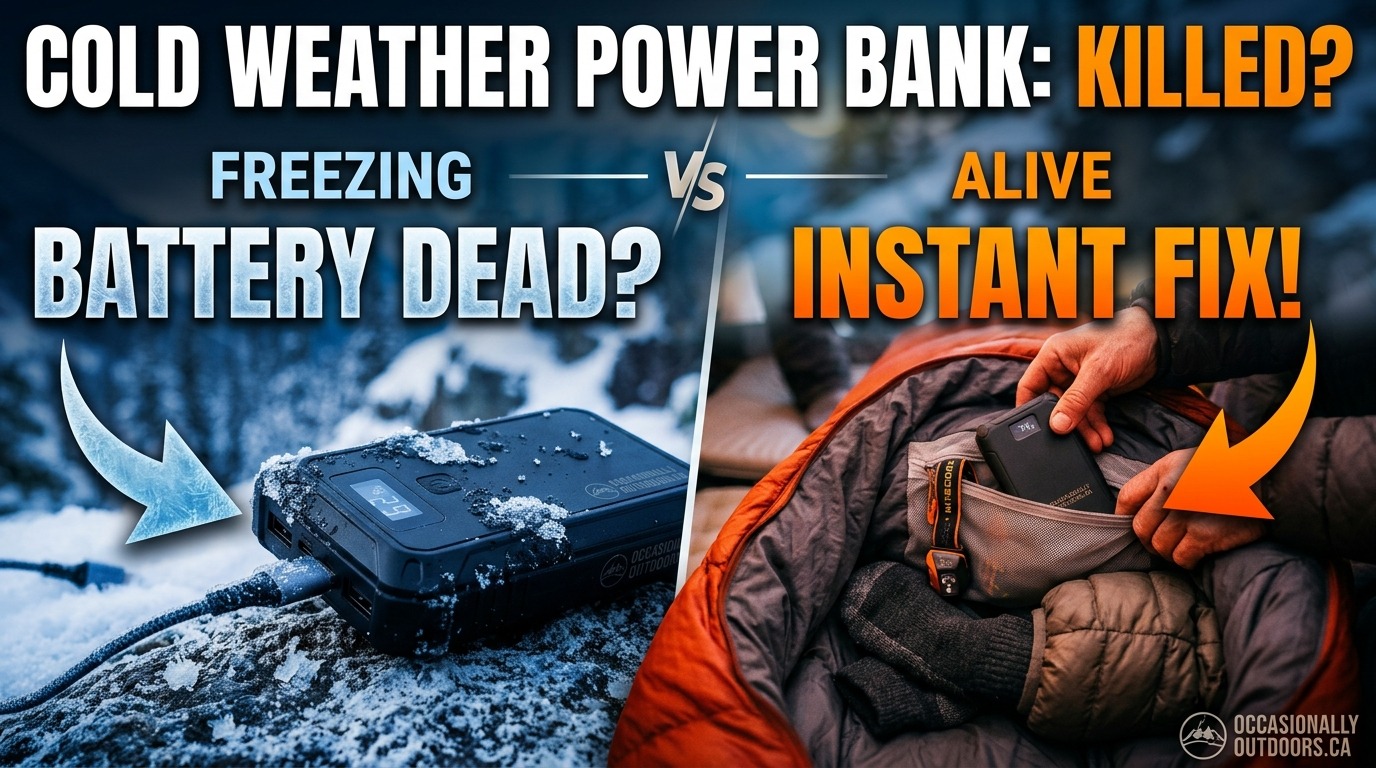

The Science: Why Cold Temps Kill Lithium Batteries
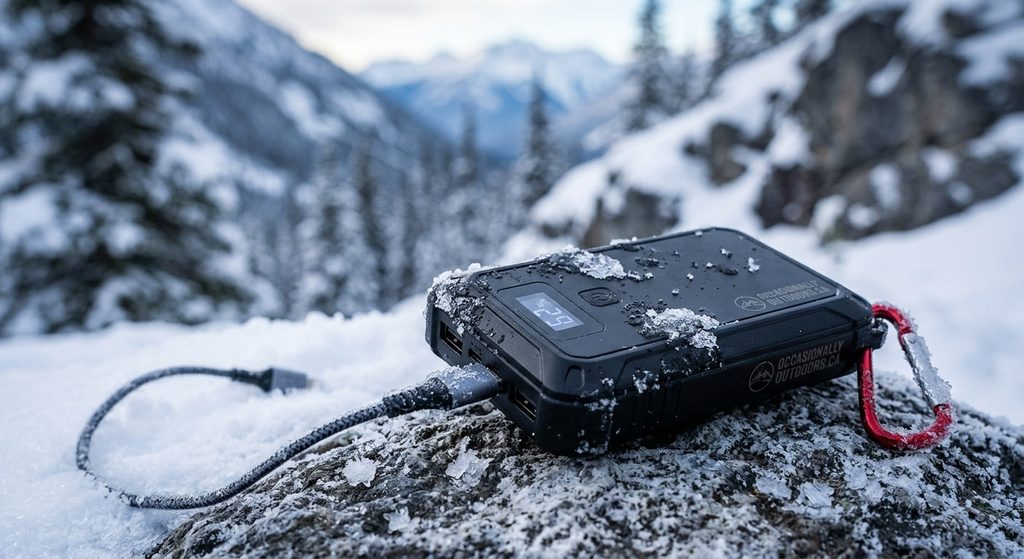
Most modern portable power banks, headlamps, and smartphones use Lithium-Ion (Li-ion) or Lithium-Polymer (LiPo) chemistries.
When temperatures drop below freezing (0°C / 32°F):
- Internal Resistance Spikes: The liquid electrolyte inside the battery thickens, slowing the transfer of lithium ions between the anode and cathode.
- Artificial Discharge Voltage Drop: The battery management system (BMS) detects low operating voltage and triggers an automatic safety shutdown—making your 10,000mAh bank read as “0%” even if energy remains stored inside.
- The Danger of Freezing Charges: Attempting to recharge a lithium cell below 0°C forces ions into the anode too quickly, causing lithium plating. This permanently degrades battery capacity and creates short-circuit risks.
| Temperature Range | Discharge Performance | Recharge Safety Status |
| Above 10°C (50°F) | 100% Efficiency | Completely Safe |
| 0°C to 10°C (32°F–50°F) | ~80% Capacity Output | Safe (Slower Speed) |
| Below 0°C (32°F) | Rapid Voltage Drop | ❌ CRITICAL DANGER: Permanent Cell Damage |
4 Field Protocols to Keep Gear Charged Below Freezing
1. Store Electronics in Your Core Layer
External pack pockets expose batteries to ambient freezing temperatures and windchill. Keep your power bank, smartphone, and spare batteries stored in an internal base-layer pocket or an insulated pouch inside your mid-layer jacket.
- Featured Product: Protect small electronics and cords from moisture inside your jacket using ultralight pouches from our Packs & Storage Accessories Collection.
2. The Overnight Footbox Rule
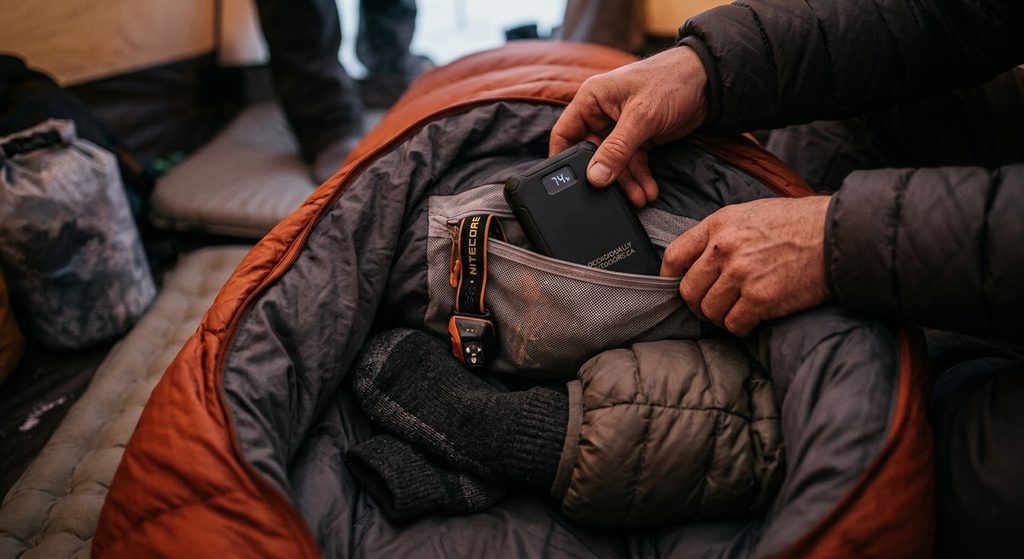
Before climbing into your sleep setup at night, drop your power bank, headlamp, and phone into the footbox of your sleeping bag or quilt. Body heat inside a bag keeps lithium cells in their optimal operating temperature zone (15°C to 20°C / 60°F to 70°F) overnight.
- Featured Product: Maintain a warm microclimate inside your shelter with high-R-value sleep setups from our Ultralight Sleep Systems Collection.
3. Warm Batteries BEFORE Plugging In
If a power bank or headlamp feels ice-cold to the touch, do not plug it into a solar panel or charger. Place it under your armpit or inside your jacket for 15–20 minutes to allow the internal electrolyte solution to warm up before initiating power transfer.
- Featured Product: Pair cold-weather battery management with cold-resilient lighting like the Nitecore NU20 Classic Ultra Lightweight Outdoor Headlamp.
4. Turn Off Unnecessary Wireless Transmitters
When cell phones lose signal in remote backcountry regions, their internal radios increase transmission power to search for towers, generating internal heat but draining battery reserves rapidly. Switch all devices to Airplane Mode and disable Bluetooth/Wi-Fi when not actively pairing with GPS devices.
Frequently Asked Questions
Why does my phone jump from 30% to 1% instantly in the cold?
This happens because low temperatures drop battery voltage below the phone’s minimum operating threshold. The software interprets this sudden voltage drop as a depleted battery and shuts down to protect internal circuits. Warming the phone back up will restore the voltage reading.
Is it safe to use hand warmers next to a power bank?
Chemical hand warmers can be used to warm gear, but avoid direct contact with uninsulated batteries. Extreme heat (above 45°C / 113°F) can cause thermal degradation. Wrap the hand warmer and power bank together in a sock or dry bag for controlled heat transfer.
Should I use disposable lithium batteries instead of rechargeable ones for winter camping?
Yes, for critical safety gear like emergency headlamps or satellite messengers, disposable Lithium (Li/FeS2) AA or AAA batteries perform significantly better in sub-zero temperatures than rechargeable Li-ion or NiMH options, maintaining steady voltage down to -40°C.