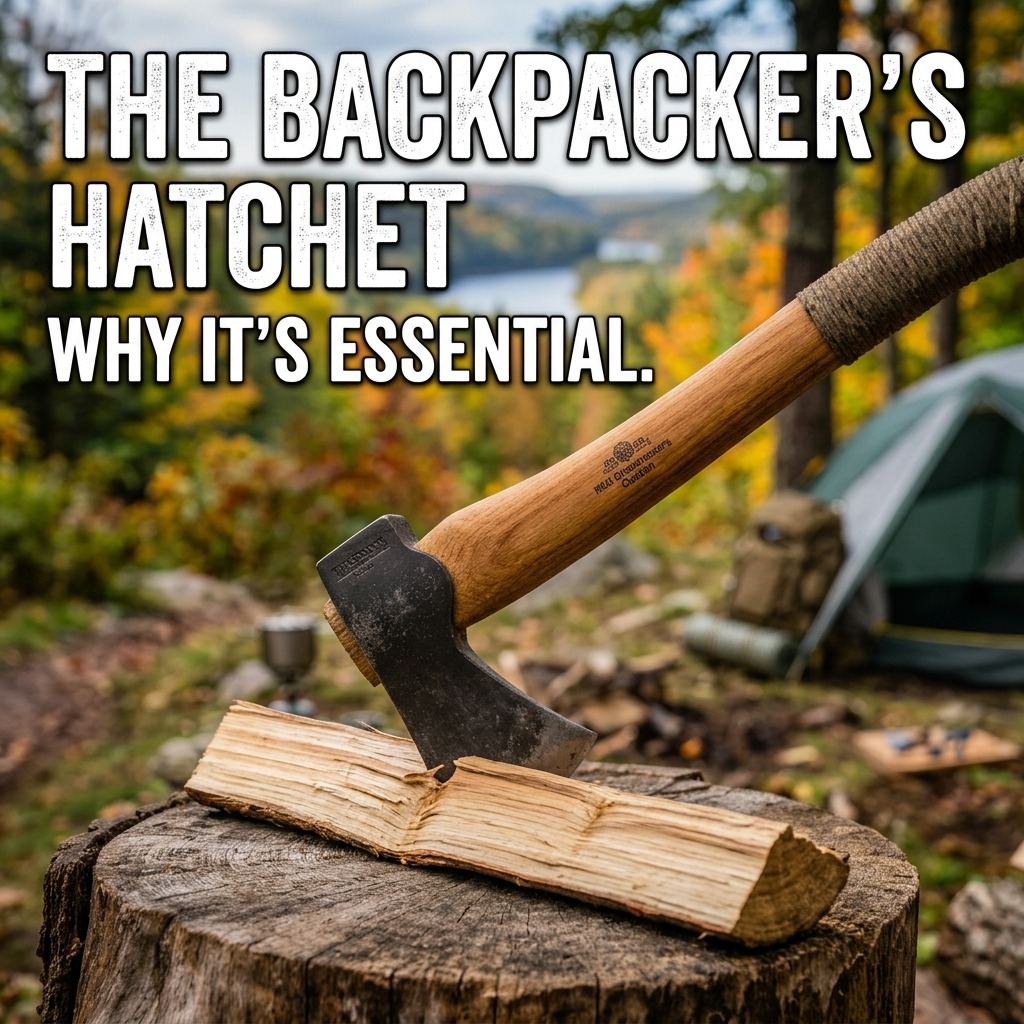

WhWhy a Backpacking Hatchet Is One of the Most Essential Tools
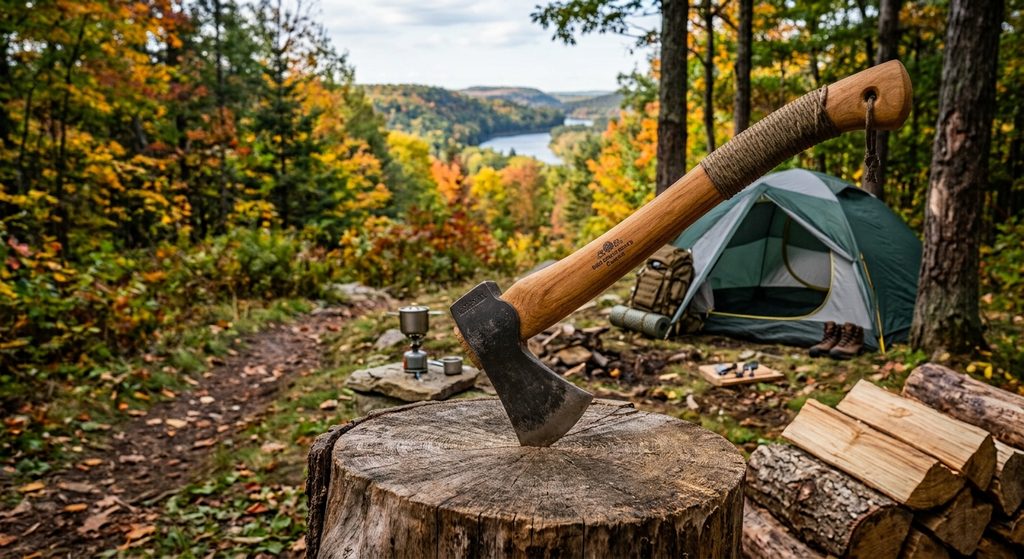
When packing for a backcountry adventure, every ounce in your pack counts. Gram-counting hikers often debate whether heavy multi-use tools deserve space in their kit. While ultralight philosophy favors minimalist pocket knives, a dedicated backpacking hatchet remains one of the most essential tools you can carry.
From winter survival and camp safety to shelter building and wood processing, a compact backpacking hatchet offers leverage, safety, and utility that smaller blades simply cannot replicate.
1. Fast & Efficient Firewood Processing
When temperatures plunge or rain sets in unexpectedly, finding dry firewood becomes your top priority. Outer tree bark and soaked fallen logs conceal dry heartwood inside.
- Splitting vs. Cutting: A folding saw can cut logs to length, but only a backpacking hatchet provides the mechanical advantage needed to split damp logs open and expose dry wood.
- Kindling Generation: Carrying a lightweight camping hatchet allows you to safely process logs into fine kindling and feather sticks, ensuring your campfire lights quickly in damp weather.
2. Unmatched Survival & Shelter-Building Utility
In wilderness survival situations—such as severe weather, lost trails, or unexpected injury—a backpacking hatchet becomes your primary survival tool.
- Emergency Shelters: Clearing deadwood, shaping ridge poles, and cutting thick pine boughs for ground insulation requires a tool with heavy impact force.
- Clearing Hazards: A backpacking hatchet makes quick work of stubborn branches or trail windfall obstructing your camp setup.
3. Multi-Tool Functionality on the Trail
Modern outdoor axes eliminate the need for several single-use camp tools, making a backpacking hatchet a highly efficient weight investment:
- Pound Tent Stakes: The heavy flat poll on the back of a backpacking hatchet functions as a hammer for driving stakes into rocky or frozen ground.
- Carve Fine Tools: By choking up on the handle near the axe head, a sharp backpacking hatchet handles delicate carving tasks, such as shaping tent pegs, spit sticks, or wooden camp utensils.
- Game & Bushcraft Prep: In deep backcountry settings, a clean axe blade easily processes large game or heavy forage.
Quick Comparison: Hatchet vs. Knife vs. Saw
| Feature / Task | Backpacking Hatchet | Fixed Blade Knife | Folding Camp Saw |
| Splitting Medium Logs | Excellent (High leverage) | Poor (Requires hard batoning) | Impossible |
| Cross-Cutting Branches | Moderate | Poor | Excellent |
| Hammering Stakes | Excellent (Heavy poll) | Impossible | Impossible |
| Fine Precision Carving | Good (Choked grip) | Excellent | N/A |
| Average Weight | 1.0 – 2.2 lbs | 0.4 – 0.8 lbs | 0.5 – 1.0 lbs |
Safe Backpacking Hatchet Handling
Safety is paramount when swinging a blade far from medical care.
- Establish a Clear Work Area: Maintain a 10-foot clearance zone free of branches, gear, and campmates.
- Use a Splitting Block: Never swing a backpacking hatchet directly toward bare ground; hidden rocks ruin blade edges or cause ricochets.
- Kneel While Chopping: Kneeling lowers your center of gravity so an accidental miss strikes the ground or log instead of your leg.
- Sheath When Stored: Keep the blade securely covered with a leather sheath whenever you carry or store your backpacking hatchet.
Frequently Asked Questions
Why bring a backpacking hatchet instead of a large knife?
A backpacking hatchet provides head weight and leverage, making it superior for splitting thick logs, driving tent stakes, and clearing heavy wood. While knives can split wood through “batoning,” doing so risks breaking the blade and uses significantly more energy.
Is a backpacking hatchet worth the weight for ultralight hiking?
For summer hikes on maintained trails, a hatchet is optional. However, for cold-weather hikes, wet wilderness conditions, or off-grid bushcraft, the thermal benefit of processing dry firewood far outweighs the 1 to 2-pound weight of a backpacking hatchet.
