
Introduction: The Great Trail Philosophy Debate
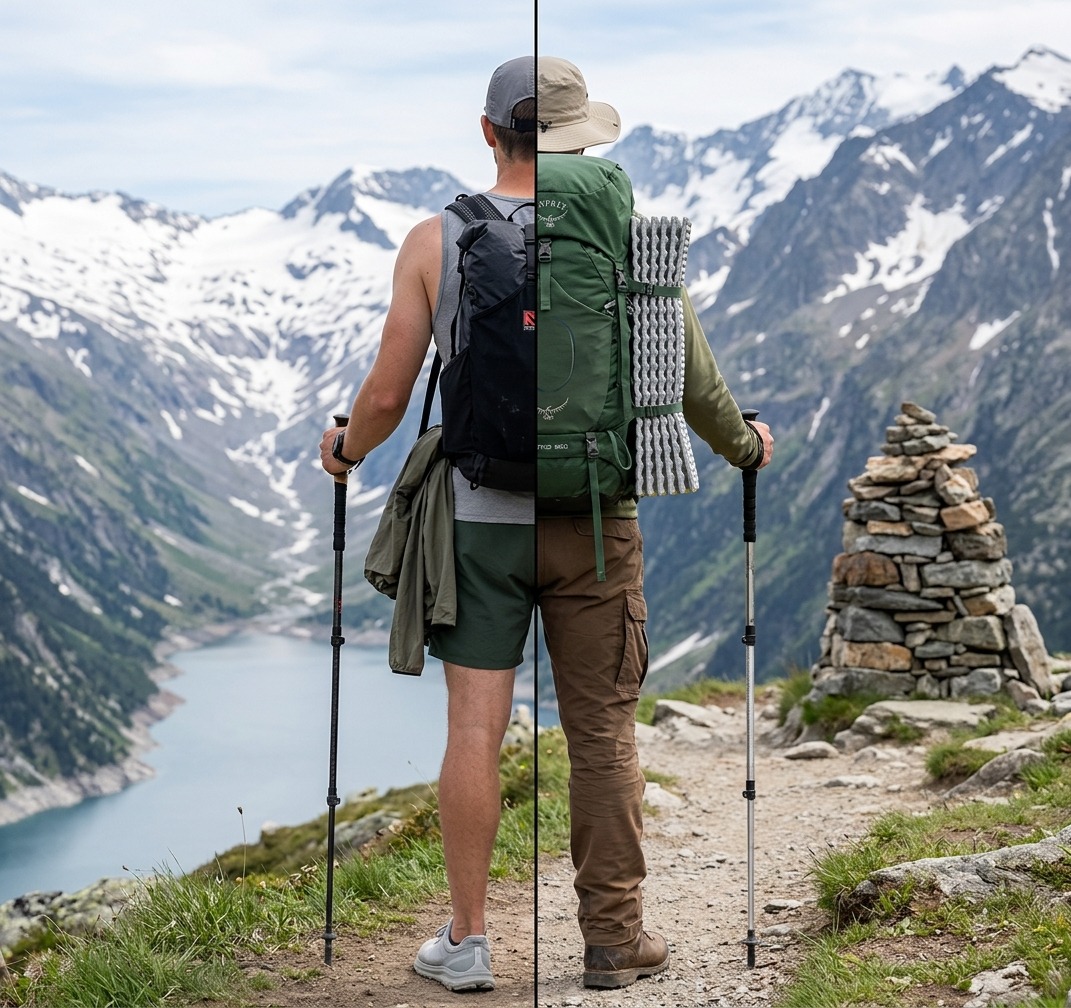
When you’re packing for a backcountry trip, every single item in your pack represents a trade-off. Do you cut off the end of your toothbrush and sleep under a tarp to shave off ounces, or do you carry a plush air mattress, a freestanding tent, and a camp chair so you can unwind in luxury after a long day of hiking?
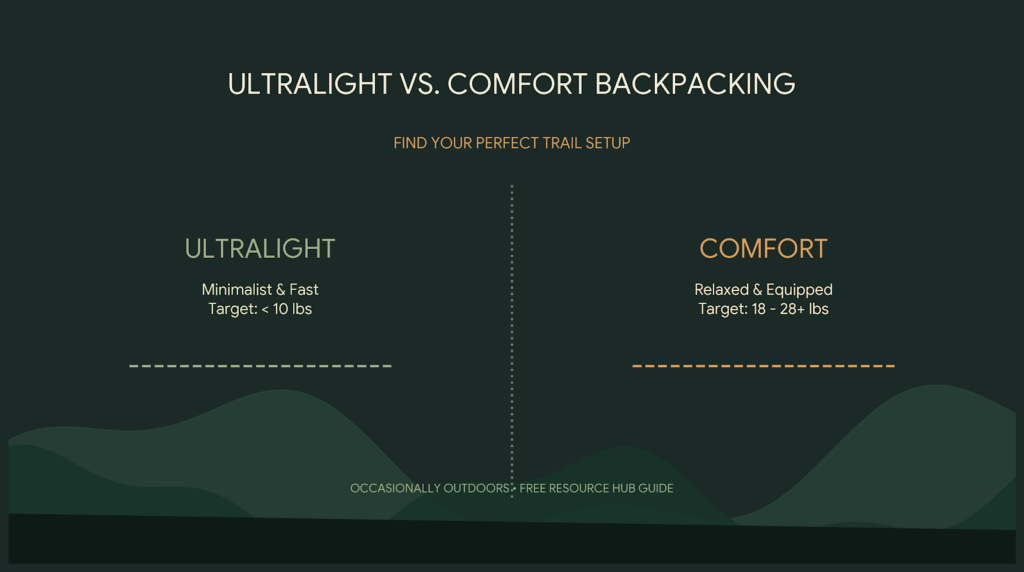
This is the classic debate between Ultralight Backpacking vs Comfort Backpacking.
Neither approach is “right” or “wrong”—they simply serve different goals, terrain types, and travel styles. Below, we break down the core philosophies, gear choices, and weight targets of both styles so you can fine-tune your setup for your next wilderness adventure.
🛠️ Looking for a handy reference to take into your gear room? We’ve created a free Ultralight vs. Comfort Backpacking free printable backpacking checklist available right now in our Occasionally Outdoors Resource Hub! Print it out or save it to your phone to audit your pack before your next trip.
1. What is Base Weight? (And Why It Matters)
Before diving into gear choices, it’s important to understand base weight. Your base weight is the total weight of your loaded backpack, excluding consumables like food, water, and fuel.
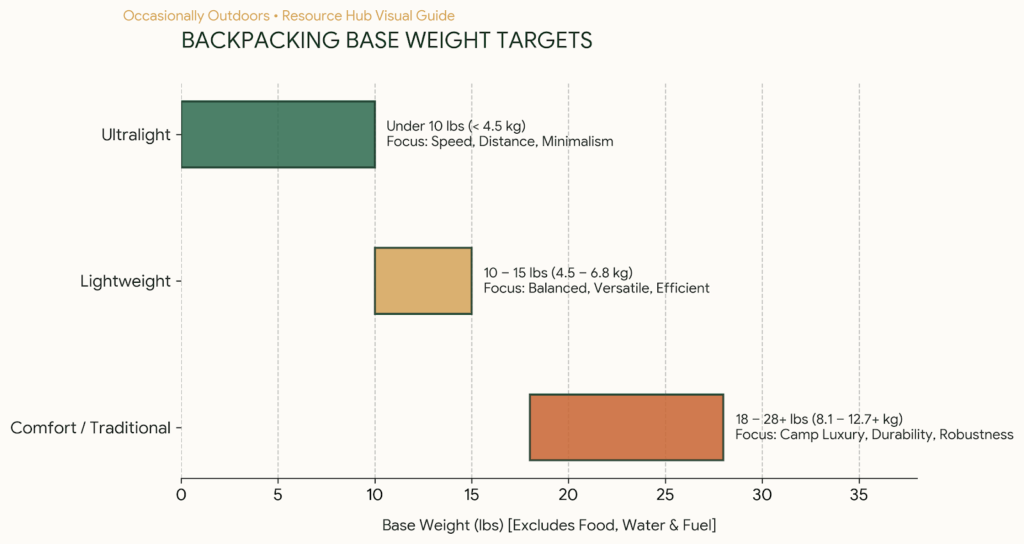
Tracked in pounds or kilograms, base weight gives you a consistent benchmark to evaluate your setup regardless of how many days of food or liters of water you are carrying.
2. The Ultralight Approach: Speed, Distance & Efficiency
The Philosophy
Ultralight (UL) backpacking is centered around minimalism and multi-use gear. The primary goal is to minimize physical fatigue on your body, enabling you to travel longer distances, move faster over steep elevation gains, and reduce strain on your knees and joints.
Signature Gear Choices
- Shelter: Single-wall trekking-pole tents or ultralight tarps paired with a polycro ground sheet.
- Sleep System: Backless down quilts (850+ fill power) paired with a compact torso-length pad.
- Pack: Frameless Dyneema or Robic nylon backpacks (35L–45L) weighing under 2 lbs.
- Kitchen: Micro titanium canister stoves (1 oz), long-handle sporks, and squeeze water filters on standard plastic bottles.
Pros & Cons
- Pros: Easier on joints, less fatigue, faster pace, effortless pack-up in the morning.
- Cons: Less margin for error in extreme weather, minimal camp comfort, higher gear cost.
3. The Comfort Approach: Relaxation, Durability & Preparedness
The Philosophy
Comfort backpacking prioritizes the campsite experience. Instead of crushing 30-kilometer days, comfort backpackers often aim for moderate distances so they can spend hours enjoying camp—cooking fresh meals, reading by the lake, or relaxing around the fire.
Signature Gear Choices
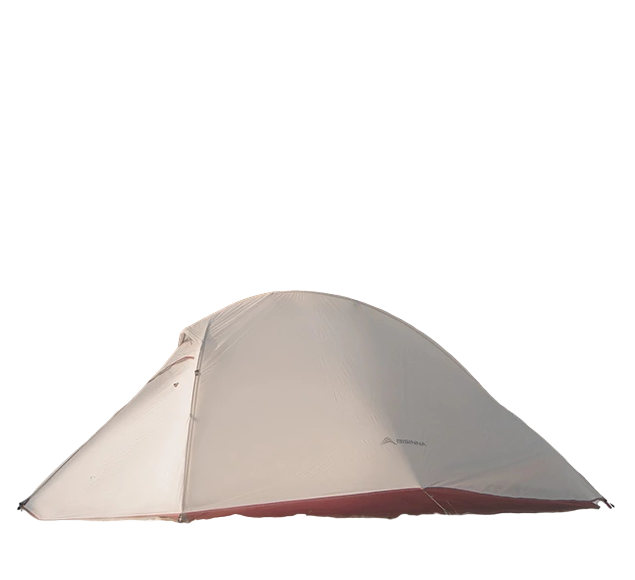
- Shelter: Double-wall, freestanding 2-person tents with spacious dual vestibules.
- Sleep System: Full mummy sleeping bags with draft collars, plush 3-inch thick insulated air mattresses, and inflatable microfleece pillows.
- Pack: Heavy-duty internal frame packs (55L–70L) featuring thick lumbar padding and customizable suspension systems.
- Kitchen: Integrated fast-boil stove systems, dedicated mugs, French press adapters, and fresh spice kits.
Pros & Cons
- Pros: Incredible night’s sleep, maximum weather protection, relaxed camp vibe, robust backup safety gear.
- Cons: Heavy impact on shoulders and knees, slower hiking cadence, larger storage footprint.
4. Side-by-Side Category Quick Comparison
| Gear Category | ⚡ Ultralight Setup | 🏕️ Comfort Setup |
| Shelter | Trekking-Pole Tent / Tarp (~1.5 lbs) | Freestanding 2P Tent (~4.5 lbs) |
| Sleep | Down Quilt + Torso Pad (~2.0 lbs) | Mummy Bag + 3″ Air Mattress (~4.0 lbs) |
| Backpack | Frameless 40L Pack (~1.2 lbs) | Padded Internal Frame 65L Pack (~4.8 lbs) |
| Footwear | Fast-drying Trail Running Shoes | Ankle-support Hiking Boots + Camp Sandals |
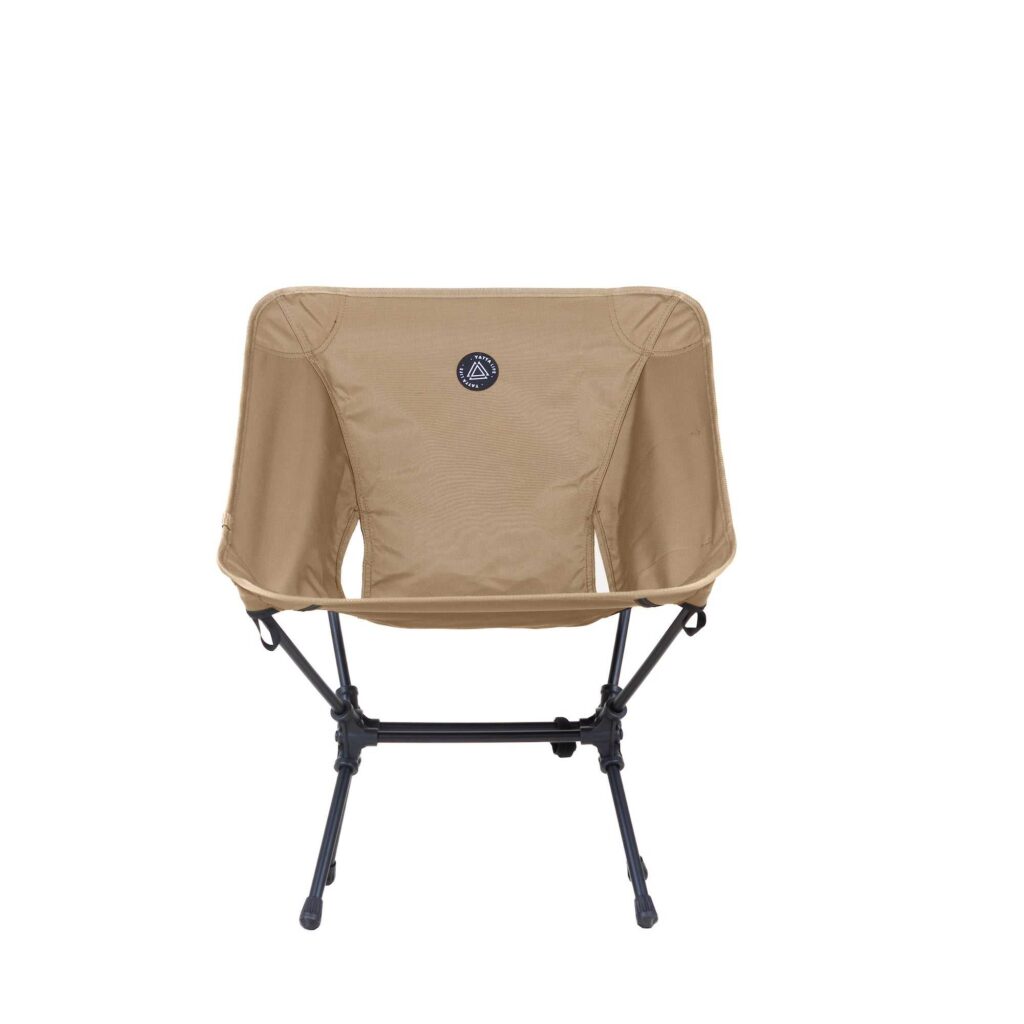
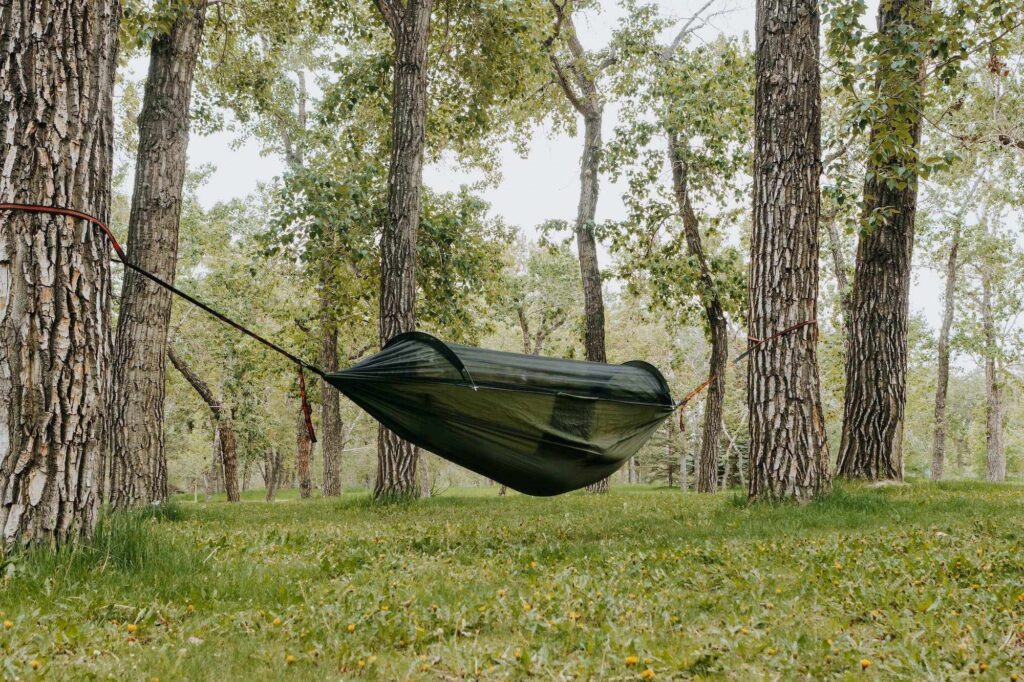
| Luxuries | Phone camera + sit pad | Camp chair, lantern, Kindle & hammock |
Download Your Free Printable Checklist!
Can’t decide which gear strategy to pack for your upcoming weekend trip? You don’t have to choose just one—many hikers mix and match (a “hybrid” setup) depending on weather forecasts and trail difficulty!
To help you audit your gear closet, we’ve published a dedicated, high-resolution Ultralight vs. Comfort Backpacking Checklist in our Free Resource Hub.
What’s Included in the Printable Sheet:
- ✅ Side-by-side gear check-boxes for all 5 primary gear categories.
- ✅ Target weight breakdowns and packing tips for each philosophy.
- ✅ Dedicated notes section for custom gear additions and trail weight tracking.
- ✅ Clean, printer-friendly PDF layout designed to pin to your gear board!
👉 Head to the Resource Hub at occasionallyoutdoors.ca to download your free PDF guide now!
What’s your default trail style—are you counting every gram, or is a portable camp chair an absolute non-negotiable for you? Let us know in the comments below!