

“Why This Pioneer Survival Food Could Ruin Your Next Hike”
If you are carrying this staple food item on your next backpacking trip, you could be risking severe gastrointestinal distress, rapid cyanotic poisoning, or worse. Thousands of outdoor enthusiasts pack it every single season without realizing the terrifying truth hiding inside their bear canisters.
The shocking killer? Raw Kidney Beans.
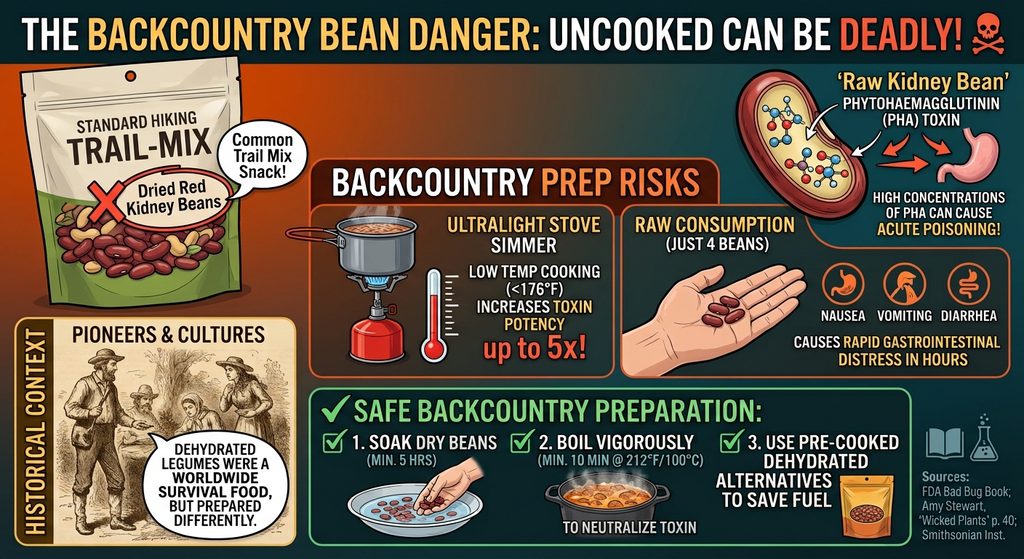
Most hikers know to bring calorie-dense, protein-packed foods on the trail. Dried beans have been hailed for centuries as the ultimate survival food—until you realize that uncooked or undercooked red kidney beans contain alarming concentrations of phytohaemagglutinin (a toxic plant lectin).
The Ultimate Survival Food with a Deadly Secret
For thousands of years, dried legumes were the single most important insurance policy human civilization had against total starvation.
- The Pioneer Lifeline: Frontier homesteaders, fur-trade voyageurs, and Oregon Trail settlers packed hundreds of pounds of dried beans into their covered wagons. They were lightweight, practically non-perishable, and packed with complex carbs and protein to fuel grueling physical labor.
- The Hard-Times Standard: From the “Three Sisters” agriculture of Indigenous North America to medieval European cellars, nearly every major culture in human history dried and stockpiled beans to survive harsh winters, crop failures, and sieges.
Yet, hidden inside this ancient survival crop is a microscopic defense system designed to destroy anything that eats it raw.
What Most Hikers Don’t Realize About Raw Beans:
- Just 4 or 5 Raw Beans Can Trigger Toxicity: Eating as few as four raw kidney beans can cause extreme nausea, severe vomiting, and acute abdominal pain within hours.
- The Slow-Cooker Trap: Thinking about simmering them slowly over an ultralight backpacking stove to save fuel? Don’t. Cooking kidney beans at low temperatures (below 176°F / 80°C) actually increases the toxin’s potency up to five times compared to raw beans.
- How Pioneers Avoided Disaster: Pioneers didn’t just toss beans into a quick camp pot; they soaked them overnight and boiled them heavily in iron Dutch ovens over hot coals for hours. To completely neutralize phytohaemagglutinin, kidney beans must be soaked in water for at least 5 hours and then boiled vigorously at 212°F (100°C) for a minimum of 10 minutes.
The Takeaway: Unless you plan on carrying enough stove fuel to roll-boil your dinner for ten solid minutes at high altitude, leave raw or undercooked kidney beans off your backcountry meal plan and stick to pre-cooked, dehydrated alternatives!
Toxicology & Cooking Guidelines
- FDA Bad Bug Book (2nd Edition, 2012): Confirms that consuming as few as 4 to 5 raw kidney beans can cause severe nausea, vomiting, and diarrhea due to high concentrations of phytohaemagglutinin (PHA). It explicitly warns that cooking kidney beans at temperatures below 176°F (80°C)—such as in slow cookers or low-heat simmering—can increase toxin potency up to five times, and mandates a minimum 10-minute boil at 212°F (100°C) after soaking.
- Stewart, Amy. Wicked Plants: The Weed That Killed Lincoln’s Mother and Other Botanical Atrocities. Algonquin Books, 2009, p. 40: Details the chemical profile of phytohaemagglutinin in red kidney beans, highlighting its swift onset of gastrointestinal distress and its historic role as a naturally occurring plant defense mechanism.
Historical & Cultural Use
- Smithsonian Institution / National Museum of American History: Documents the use of dried legumes as a non-perishable staple for 19th-century pioneers, fur traders, and homesteaders traveling the Oregon and Santa Fe trails.
- USDA National Agricultural Library: Details the “Three Sisters” intercropping method (corn, beans, and squash) used by Indigenous peoples across North America to provide long-term storage crops and complete protein nutrition over winter months.
