

The Ultimate Guide to Camping Stoves: From Modern Tech to Indestructible Classics
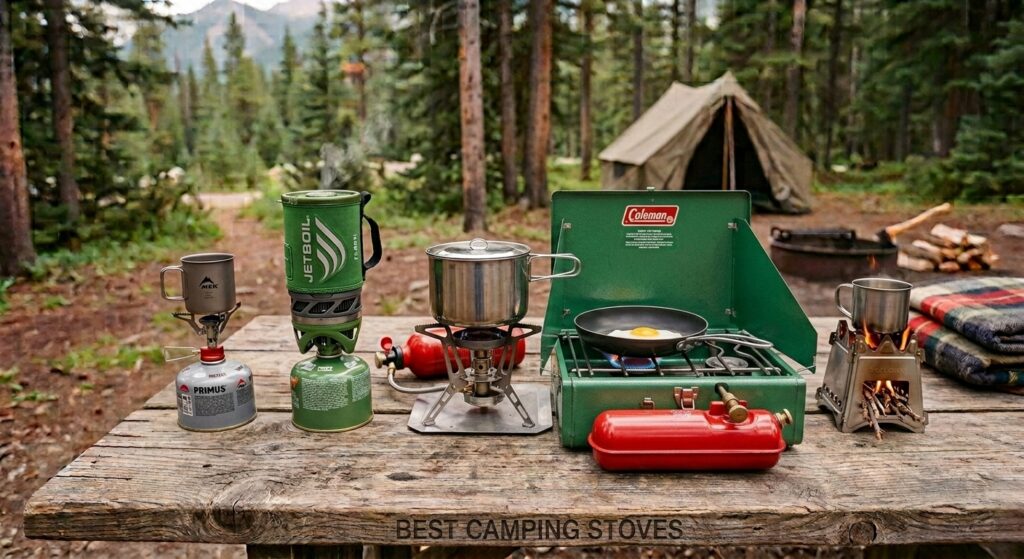
There is something inherently magical about waking up in the wilderness, listening to the morning breeze through the trees, and hearing the hiss of a camp stove firing up for that first cup of coffee. Whether you are car camping with the family, embarking on a multi-day backpacking trek, or setting up a base camp deep in the woods, choosing the right stove can make or break your outdoor culinary experience.
Today, the outdoor market is flooded with options ranging from ultralight titanium stoves that weigh less than an apple to high-tech integrated boiling systems. But while modern convenience has brought us push-button ignitions and micro-regulators, one iconic stove still reigns supreme when it comes to sheer ruggedness and longevity: the classic green Coleman 2-burner camp stove.
In this guide, we’ll break down the main types of camping stoves available today and take a closer look at why that vintage green workhorse in your grandparent’s garage might still outshine anything bought brand new.
1. Canister Stoves (Isobutane / Propane Blend)
Best For: Backpacking, quick weekend trips, and simplicity
Canister stoves screw directly onto small, sealed fuel canisters containing a pressurized mix of isobutane and propane.
- Pros: Exceptionally lightweight (often under 3 oz), compact, easy to operate, and offers precise flame adjustment for simmering.
- Cons: Canister performance drops significantly in sub-freezing temperatures, canisters cannot be refilled (requiring proper recycling/disposal), and fuel levels can be hard to gauge.
2. Integrated Stove Systems
Best For: Solo backpackers, fast-and-light mountaineering, and boiling water quickly
Systems like the Jetboil or MSR WindBurner pair a canister burner directly with an engineered pot featuring a heat-exchanger ring.
- Pros: Unmatched fuel efficiency and lightning-fast boil times (boiling water in under 2 minutes). Excellent performance in windy conditions.
- Cons: Bulky for packing, difficult to simmer delicate food without scorching, and limited to using the dedicated cookware.
3. Liquid Fuel Backpacking Stoves
Best For: Winter camping, high-altitude expeditioning, and international travel
These stoves run on liquid fuels such as white gas (naphtha), kerosene, unleaded auto gasoline, or diesel, using a refillable bottle and manual pump system.
- Pros: Performs reliably in deep freezing temperatures and high altitudes. White gas burns hot and clean, and fuel is universally available around the globe.
- Cons: Requires priming and manual pressurization. Heavier and messier than standard canister stoves, with a slight learning curve.
4. Modern Tabletop Propane Stoves
Best For: Family car camping, tailgating, and group meals
Designed for convenience, these multi-burner stoves run on standard 1 lb green propane cylinders (or larger tanks with an adapter).
- Pros: Wide cooking surface, easy push-button piezo igniters, stable flame control, and the ability to cook with standard household pots and pans.
- Cons: Heavy, bulky, reliant on disposable propane cylinders, and often built with thinner metals and electronic igniters that can fail over time.
5. Wood-Burning & Biomass Stoves
Best For: Off-grid survivalist camping and minimalist solo trips
Using twigs, pinecones, and small pieces of wood gathered around camp, these stoves harness natural fuel sources to generate heat.
- Pros: Unlimited free fuel—never carry fuel canisters or heavy liquid bottles again.
- Cons: Requires dry fuel, produces smoke/soot on cookware, banned during fire bans, and requires constant stoking.
The Undisputed King of Durability: The Classic Coleman 2-Burner Liquid Fuel Stove
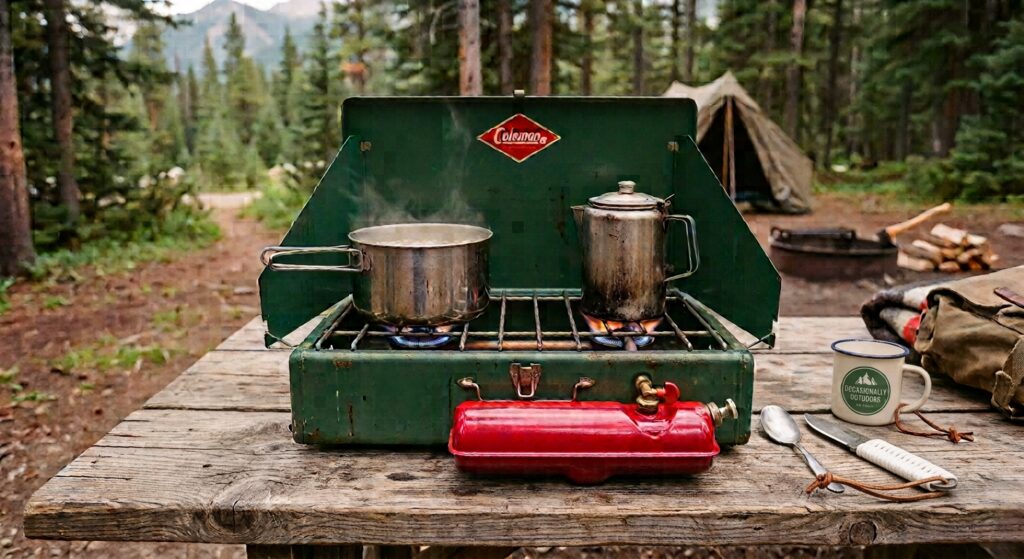
While modern canister stoves offer speed and convenience, nothing compares to the legendary durability of the older-style Coleman liquid fuel 2-burner camp stoves (such as the iconic Model 425 and Model 413).
This will outlive you and your children.
First introduced mid-century, these green suitcase-style stoves were engineered during an era when products were built to be repaired, not replaced. Here is why the vintage Coleman stove remains an unbeatable masterpiece of outdoor gear:
1. Indestructible Heavy-Gauge Construction
Unlike modern camp stoves built with thin sheet metal, plastic dials, and delicate electronic igniters, older Coleman stoves were built from thick stamped steel, brass valves, and rugged cast-iron burner heads. They can survive being bounced around in the bed of a pickup truck, dropped on rocks, and exposed to decades of outdoor elements without flinching.
2. The Simplicity of “White Gas” (Coleman Fuel)
Operating on liquid white gas stored in the classic red fuel tank, the stove uses a simple mechanical pump to pressurize the tank and a solid brass generator tube that converts liquid fuel into gas vapor as it warms up. It provides consistent, roaring heat regardless of freezing temperatures or elevation.
3. Infinite Serviceability
There are no printed circuit boards, plastic fittings, or disposable micro-valves to crack or fail. If a 50-year-old Coleman stove develops an issue, it’s almost always fixed with five minutes of maintenance:
- Replacing or oiling the leather pump cup
- Cleaning out the brass generator tube
- Flushing out old fuel
Virtually every single part on a vintage Coleman stove can be disassembled with a standard wrench and screwdriver, cleaned, refurbished, and put back to work.
4. A True Family Heirloom
Walk through any campground today and you’ll find camper after camper using a Coleman Model 425 handed down from their parents or grandparents. Stoves manufactured in the 1950s, 60s, and 70s are routinely pulled out of storage, pumped up, and lit on the first try—delivering steady, roaring dual burners that cook bacon and eggs just as reliably today as they did over half a century ago.
Final Thoughts: Which Stove Is Right for You?
- If you’re backpacking long distances, opt for a canister stove or integrated stove system to save weight and space.
- If you’re expeditioning in extreme cold, go with a liquid fuel backpacking stove.
- If you want pure convenience for weekend car camping, a modern propane stove gets the job done quickly.
- But if you want uncompromised reliability, timeless design, and a piece of gear that will literally outlive generations, track down a vintage Coleman 2-burner liquid fuel stove. Clean it, oil the pump, and rest easy knowing it will be cooking family breakfasts long into the future.
