
The 1-Bag Catch & Cook: Minimalist Backcountry Fishing and Cooking Setup
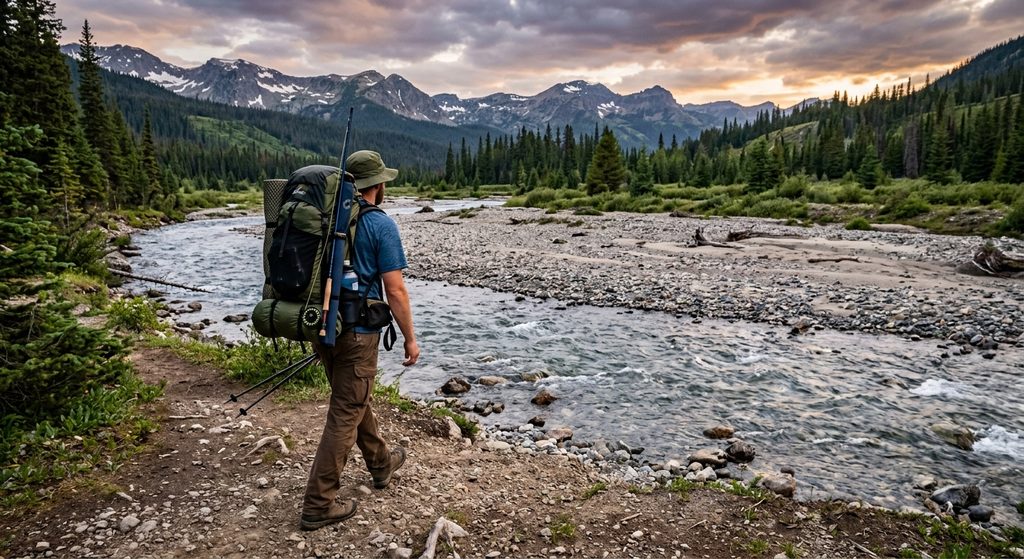
There is nothing quite like sitting on a granite ledge after a 10-mile trek with a sizzling fillet of wild trout cooking over glowing hardwood embers. But for many backpackers, the dream of a wilderness catch-and-cook quickly dies during packing. Traditional fishing gear is bulky, cast iron skillets weigh a ton, and carrying an entire kitchen setup up a mountain elevation is a quick recipe for sore shoulders.
The good news? You don’t need to choose between ultralight backpacking efficiency and eating like royalty off the grid. By adopting a multi-use mindset and dialing in your kit, you can carry a complete angling and backcountry kitchen setup that weighs under two pounds combined.
Here is how to build a streamlined, 1-bag catch-and-cook setup—plus how to manage food safety and scent in the backcountry.
1. The Minimalist Fishing Rig (Under 8 oz)
The biggest mistake anglers make on the trail is packing for every possible fishing scenario. In mountain streams and high-alpine lakes, trout are opportunistic feeders. You don’t need a heavy tackle box—you just need the essentials.
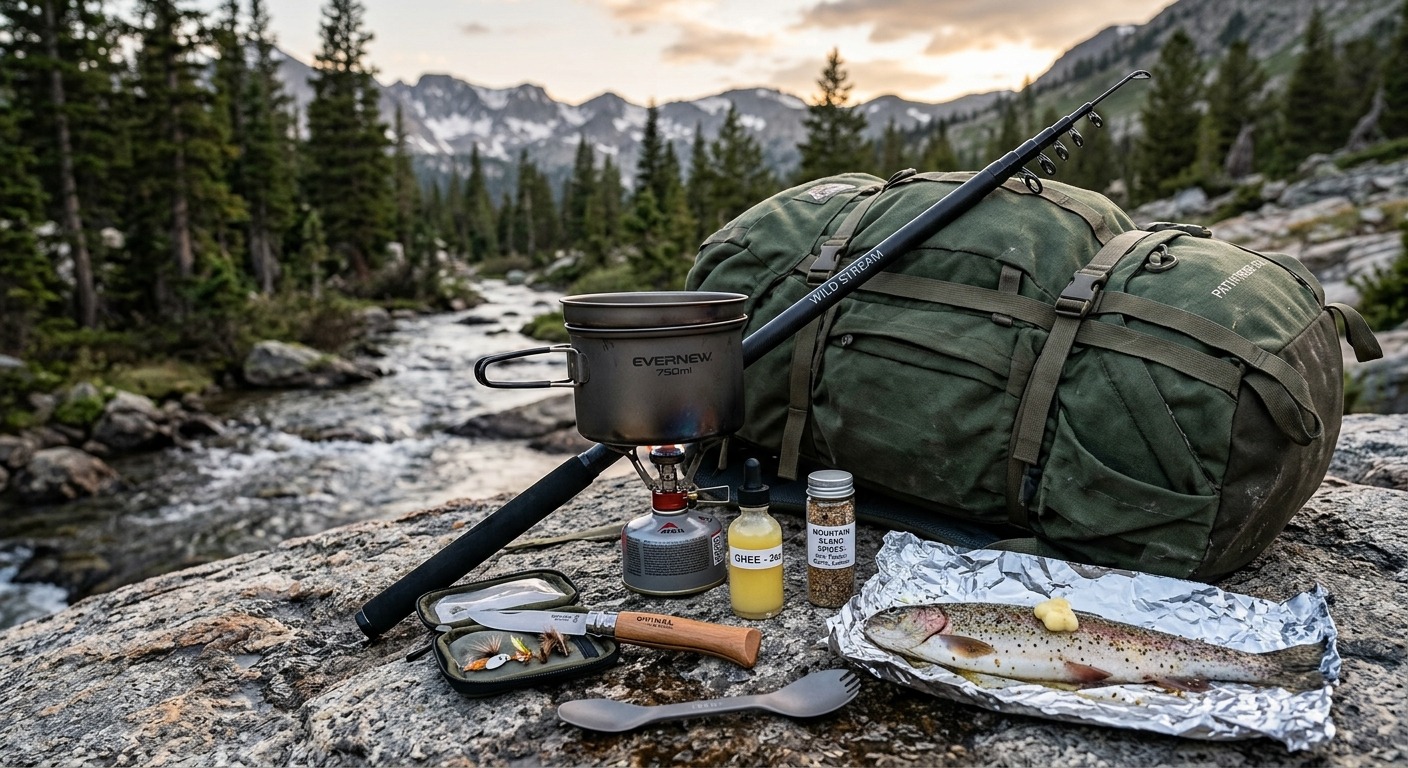
- The Rod Setup: Skip the bulky two-piece rod and heavy reel. Instead, opt for a telescoping Tenkara rod or a ultra-compact 4-piece light spinning rod paired with a miniature 1000-size reel. Tenkara setups eliminate reels altogether, cutting weight and eliminating line-tangle headaches in thick brush.
- The “Pocket” Tackle Kit: Leave the plastic tackle trays at home. Slide a piece of high-density foam into a small waterproof zip pouch. Stick in 2 inline spinners, 3 versatile flies, a few split shots, small hooks, and a spool of tippet material.
- Multi-Use Tools: Ditch single-purpose tools. Carry a compact micro-pliers with built-in line cutters—it unhooks fish, cuts line, and doubles as an emergency hot-pot grabber for your stove setup.
2. The Dual-Purpose Camp Kitchen (Under 10 oz)
When it comes to cooking wild game on the trail, multi-use cookware is king. Leave the heavy skillets behind; your primary vessel needs to boil water for morning coffee and cook dinner.
- Cookware: A single 750ml to 900ml titanium pot or lightweight hard-anodized aluminum pot is all you need. Titanium boils water fast, while anodized aluminum distributes heat slightly better for pan-frying.
- The Flame & Coal Strategy: Bring an ultralight canister stove for rapid water boils, but rely on heavy-duty aluminum foil for cooking fish. Wrapping your catch in foil and laying it directly on a bed of hardwood camp coals saves canister fuel and renders fish incredibly tender without burning.
- Utensils & Prep: Pack a sturdy fixed-blade or small folding knife for field dressing and filleting. Combine this with a long-handled titanium spork that lets you eat out of pots without getting grease on your hands.
3. The Trail Pantry: 4 Ingredients for a Gourmet Catch
You don’t need a pantry on your back to make fresh trout taste incredible. Keep these four shelf-stable essentials packed in leak-proof dropper bottles and small reusable pouches:
- Solid Fat: Ghee (clarified butter) or olive oil stored in a squeeze dropper bottle. Ghee holds up well at ambient trail temperatures and adds incredible flavor over coals.
- The Ultimate Spice Blend: A micro-shaker filled with a mix of coarse sea salt, cracked black pepper, garlic powder, and lemon pepper blend.
- The Crust: A small bag of cornmeal or quick oats for instant pan-searing if you’re cooking in your pot lid.
- Heavy-Duty Foil: Pre-cut 12×12 squares folded flat into your cook pot.
4. Backcountry Safety, Food Storage & Bear Protocol
Cooking fish in the wilderness introduces strong food scents that can attract unwanted wildlife. Managing risk starts long before you light your stove.
Run a “Pre-Mortem” Before Hitting the Trail
Before heading out into remote terrain, run a quick safety assessment. Identify single points of failure in your kit and establish hard-stop triggers (e.g., weather shifts, water availability, or gear damage). To streamline your planning, download our printable Trip Pre-Mortem & Float Plan Matrix PDF from the Occasionally Outdoors Resource Hub. Fill out the float plan and leave it with a contact at home before stepping onto the trail.
Leave No Trace & Scent Containment Rules
- Cleaning Fresh Fish: Clean fish away from your main camp area. Punctuate air bladders and sink fish entrails into deep, fast-moving water, or bury them according to local park regulations.
- Washing Up: Wash your cook pot, knife, and utensils at least 200 feet away from lakes, streams, and your sleeping site using biodegradable soap and filtered water.
- Overnight Storage: Anything that touched fish, oil, or bait is considered a bear attractant. Store your cook kit, spices, and trash inside a scent-proof bag and lock it inside a bear canister or hoist it in a proper bear bag hang 100 yards downwind from your tent.
Ready to Pack Your Gear?
A successful catch-and-cook trip comes down to packing smart, respecting nature, and keeping your systems lightweight.
Need help dialing in your pack for your next outing? Head over to the Occasionally Outdoors Resource Hub to grab our free Printable Backpacking Checklists and safety field sheets, or explore our collection of Camping Gear & Cookware to upgrade your trail kitchen before your next adventure.
