
The Ultimate Guide to Tent Pegs: Best Stakes for Every Ground Type
Choosing the right tent stake is the difference between a secure shelter and waking up in a collapsed tent during a midnight gale. Different ground conditions require specific anchor designs to maximize holding power.
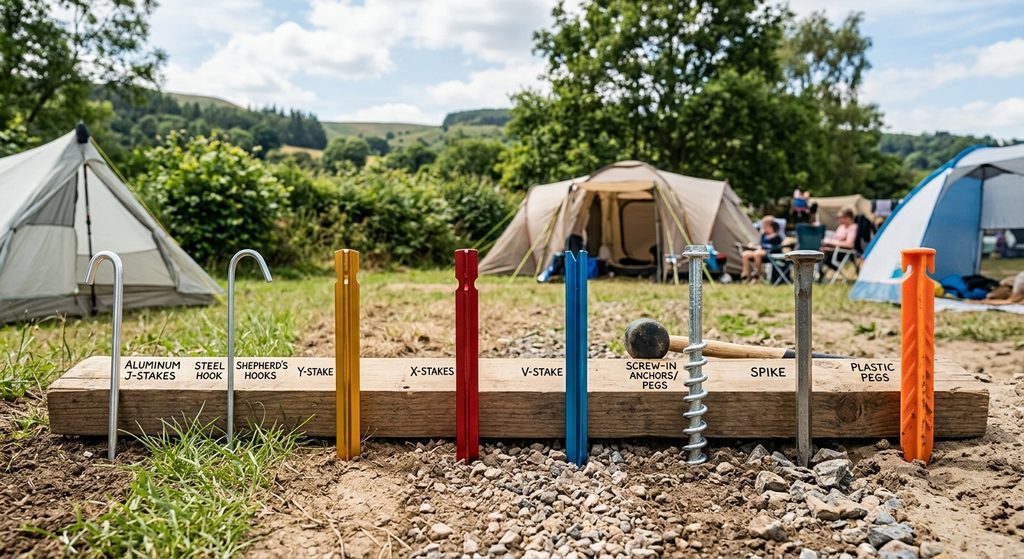
Shepherd’s Hooks & Wire Stakes
- Best Use: Hard-packed soil, manicured campgrounds, and light backpacking where weight is a priority.
- Advantages: Extremely lightweight, compact, and easy to slide into dense, rocky dirt without bending if hit squarely.
- Disadvantages: Offer very poor holding power in loose soil, sand, or high-wind storms because they pull out easily under lateral stress.
Y-Stakes & V-Stakes
- Best Use: Multi-purpose camping, forest floors, loam, and moderate-to-high wind conditions.
- Advantages: The multi-flanged profile creates maximum surface area friction against dirt, making them significantly harder to pull out than round wire stakes.
- Disadvantages: Can be difficult to hammer into hard, sun-baked clay or rocky ground without bending the lightweight aluminum ridges.
Aluminum J-Stakes & Steel Hooks
- Best Use: General family camping, soft-to-medium soil, and securing guy lines or heavy tent corners.
- Advantages: The curved top makes it easy to hook and unhook guy lines quickly, while the thicker shaft resists snapping under pressure.
- Disadvantages: Heavier than minimalist backpacking stakes and susceptible to spinning or loosening in sandy substrates.
Spike Stakes
- Best Use: Extremely hard, rocky, or frozen ground where standard stakes fail to penetrate.
- Advantages: Made of thick, heavy-duty steel or aluminum, they act like nails that can be relentlessly hammered through roots, hardpan, and packed gravel.
- Disadvantages: Rely entirely on friction, meaning they pull straight out of loose, muddy, or sandy soil with minimal effort.
Screw-In Anchors
- Best Use: Loose sand, deep snow, coastal beaches, and high-wind basecamp setups.
- Advantages: Provide exceptional mechanical grip by threading deep into unstable ground where traditional stakes slip out instantly.
- Disadvantages: Require significantly more time and physical effort to twist into place, and are heavier to pack on lightweight trails.
Plastic Pegs
- Best Use: Casual summer camping, soft grass, and sand where surface area matters more than rigidity.
- Advantages: Inexpensive, completely rust-proof, and broad profiles prevent them from tearing through loose earth.
- Disadvantages: Brittle in freezing temperatures and prone to snapping entirely if struck with a heavy mallet on hidden rocks.
Matching your hardware to your campsite’s specific soil composition ensures your shelter stays firmly anchored, no matter what the weather forecast brings.
